The Colonial Mindset
Western Hegemony: the lens in which we perceive everything

In many Western educational systems, the history curriculum has traditionally centered on the achievements and perspectives of the colonizers, neglecting or downplaying the experiences and perspectives of the colonized.
Indigenous and Western worldviews are quite different. Indigenous views value nature and community harmony, while Western ideas prioritize humans over nature and resource use. Western thought sees humans as superior to everything else in the environment. The colonial mindset refers to attitudes, behaviors, and practices that mirror the dominance, exploitation, and disregard for the well-being of others often seen during the colonial era.
This lens shapes how societies perceive and interact with the world around them, including other cultures, peoples, and places. The colonial lens is characterized by a power dynamic in which the colonizing group views itself as superior to the colonized group and sees the colonized group's culture and values as inferior or barbaric. This way of thinking can lead to stereotypes, discrimination, and exploitation of the colonized group, as well as a lack of understanding and empathy toward their experiences, perspectives, and worldview. The effects of the colonial lens are still evident today, as many societies continue to grapple with the legacy of colonialism and its ongoing impacts on issues such as race, power, and inequality.
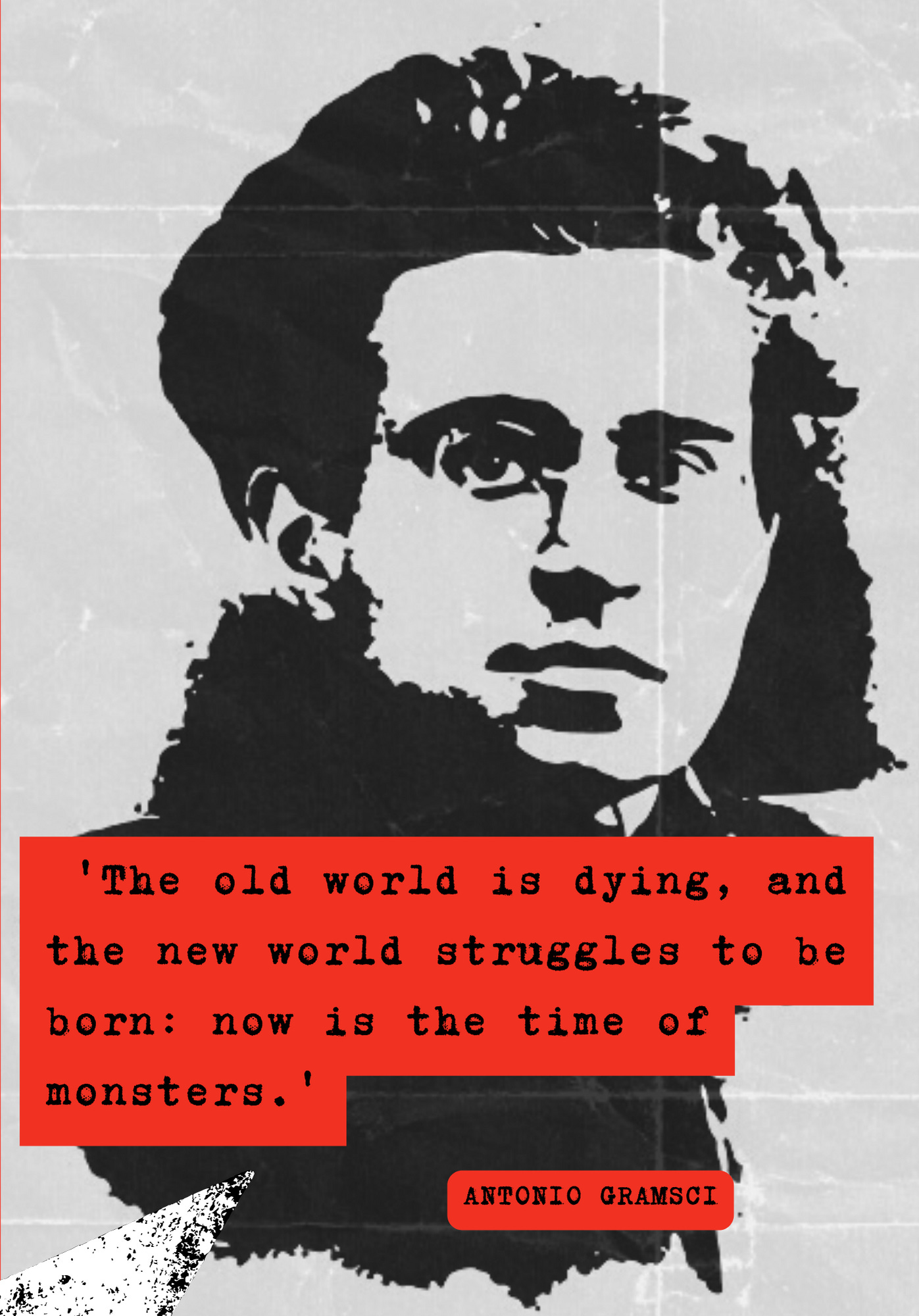
Antonio Gramsci was an Italian Marxist philosopher who argued that revolutionary change requires a deep understanding of reality. According to Gramsci, hegemony is the way ruling elites utilize mass culture, media, and education to shape and control our perception of reality, advancing their own interests. As passive consumers of mass culture, people do not perceive the world not as it is happening, but rather as it is presented and interpreted for them. In order for a revolution to occur, people must gain enough consciousness to see through the dominant culture's stereotypes, and narratives. Gramsci saw that the capitalist’s role was not only to maximize profit but also to shape people's beliefs and values. In our consumer society, mass culture, and media demonize groups that the ruling elites scapegoat and fear, such as people of color, the poor, and anti-capitalists.
Gramsci proposed that before any revolution happens, there's a need to critically examine and discuss ideas. This includes sharing culture and spreading new concepts. For a revolution to work, people should have a deep understanding of themselves, others, history, and past achievements that shaped their society. Revolutions are mainly a battle of competing ideas.
In Marxism, everything is viewed through the lens of the common laborer. For the working class to successfully launch a proletarian (workers) revolution, there must be a shared class consciousness. This means recognizing their identity as workers, distinct from capitalists, and understanding that their interests oppose those of capitalists. Solidarity within the working class stems from acknowledging a common status, and change comes as the working class unites to challenge political power, driving the socialist transformation of society.
The wealthy and powerful also utilize popular culture to portray real economic and social issues as personal challenges rather than institutional ones. They turn legitimate economic and social grievances into individual psychological and emotional problems and encourage people to believe in themselves and focus on their own dreams which creates a cycle of hyper individualism. They encourage us to have self-confidence, work diligently, obey authority, adhere to self-help guidance, pursue a quality education, strive for success, and have faith in our aspirations.
The "meritocracy myth" is the notion that people's success is exclusively determined by their personal skills and hard work. This perspective disregards how social advantages and systemic inequalities can affect opportunities and results. This myth plays a role in sustaining the capitalist system by distracting attention away from fundamental structural issues while we blame each other, enabling them to maintain control over us.
When the ruling ideas become less believable and popular culture loses its power, the systems they depend on break down. A phase of conflicting concepts and cultural transformation occurs. This process is crucial for any substantial social or political revolution.
“All men are intellectuals, but not all men have in society the function of intellectuals”
-Antonio Gramsci [ Selections from the Prison Notebooks ]